Holy Anointing Oil Recipe in Exodus 30: Understanding God's Sacred Formula
Holy Anointing Oil Recipe in Exodus 30: Understanding God's Sacred Formula
The holy anointing oil recipe found in Exodus 30 represents one of the most profound and sacred formulas in biblical history. This divinely inspired composition was not merely perfume or cosmetic oil, but a sacred substance set apart exclusively for God's purposes. Understanding this ancient formula reveals the deep spiritual significance of anointing oils throughout Scripture and their continuing relevance in our prayer lives today. At Mount of Olives, we honor this biblical tradition by crafting anointing oils that honor the essence of God's original design.
The Divine Blueprint in Exodus 30:22-33
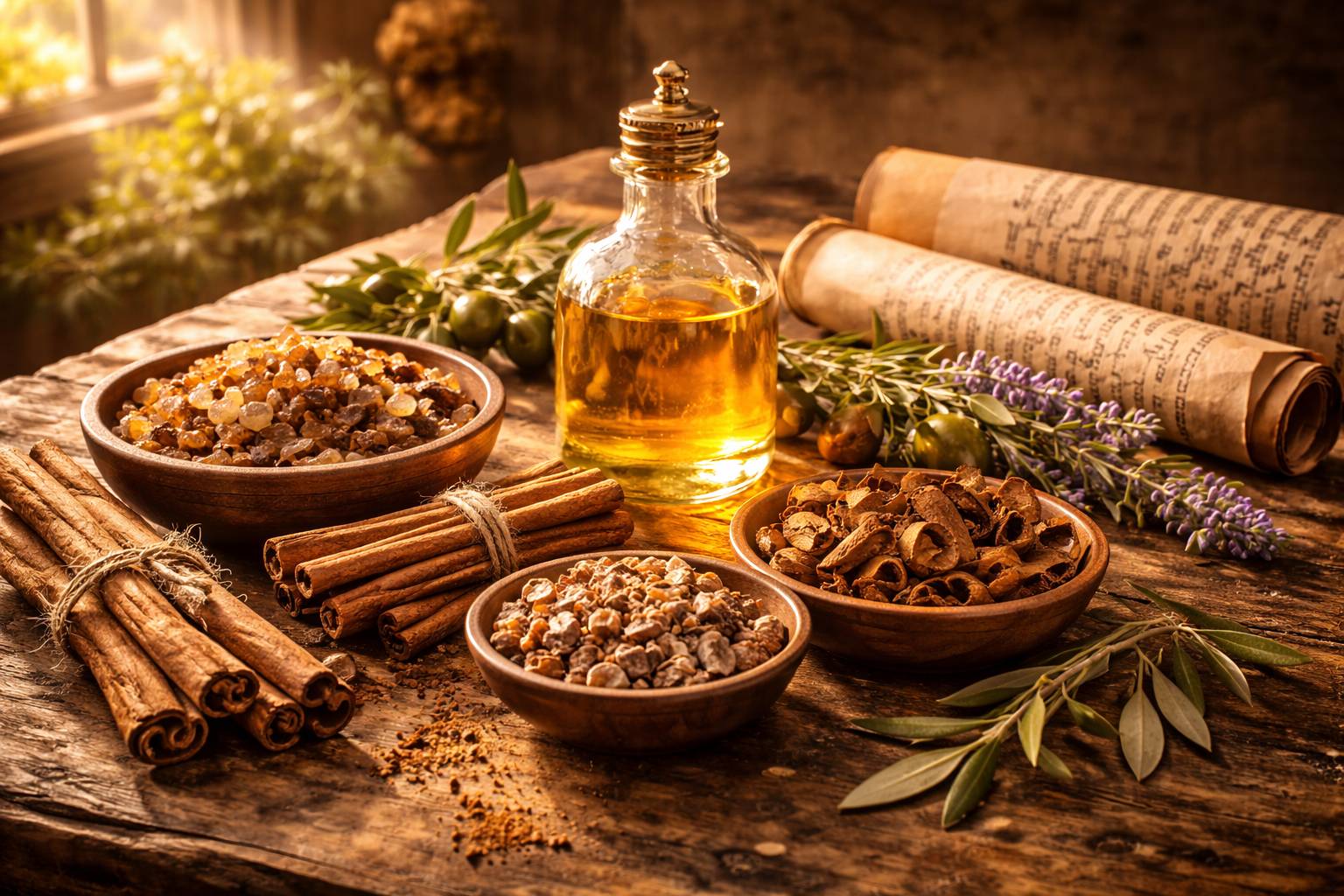
The Lord commanded Moses to create a sacred anointing oil using four primary ingredients: liquid myrrh, cinnamon, cane, and cassia, mixed together with about a hin of olive oil. This recipe wasn't arbitrary—each ingredient carried spiritual significance and practical benefits. The holy anointing oil was exclusively for anointing the tabernacle, its furnishings, and the priests. No one was permitted to make this formula for personal use, demonstrating its sacred nature and the reverence God demanded.
The specific measurements and ingredients reveal God's attention to detail. The use of olive oil as the base—roughly a quart and three-quarters—demonstrates the importance of this precious commodity in biblical times. Myrrh represented bitter suffering and redemption. Cinnamon symbolized warmth and healing. Cane (possibly aromatic reed) represented revival and renewal, while cassia brought grounding and foundation. Together, these elements created something far greater than their individual properties.
Understanding Each Sacred Ingredient
Myrrh has been used for thousands of years in religious ceremonies and burial practices. It represents pain, suffering, and ultimately redemption through sacrifice. The wise men brought myrrh to Jesus, acknowledging His ultimate sacrifice. In the holy anointing oil, myrrh grounded the formula in the reality of Christ's redemptive work.
Cinnamon was one of the most precious spices of the ancient world. It represented divine power and warmth, often associated with God's presence. The aromatic properties would have filled the tabernacle with a heavenly fragrance, creating a multisensory experience of worship. Our Mount of Olives collection incorporates these principles of sacred aromatic worship.
Cane, likely referring to calamus or sweet cane, represented growth and revival. It was a refreshing aromatic that would have balanced the heavier notes of myrrh and cassia. In biblical symbolism, cane represents the soul's ascent toward God and spiritual elevation.
Cassia provided a grounding, woody base note. It represents stability, foundation, and the enduring nature of God's covenant. The inclusion of cassia ensured the fragrance would linger and remain constant, much like God's eternal presence.
The Significance of Olive Oil as Foundation
Olive oil served as the perfect base for this sacred formula. Throughout Scripture, olive oil symbolizes the Holy Spirit, healing, and God's blessing. Jesus Himself was anointed with oil in preparation for His crucifixion. The generous amount of olive oil in the formula—roughly 1.5 quarts—ensured the anointing would be abundant and that the precious spices would be properly distributed throughout.
The olive tree itself appears throughout Scripture as a symbol of peace, faithfulness, and fruitfulness. The Mount of Olives, where Jesus prayed in Gethsemane, became the namesake for our brand, honoring this sacred tradition of anointing oils rooted in biblical truth.
The Exclusive Purpose and Spiritual Authority
God's instructions were explicit: "It shall be a holy anointing oil to Me throughout your generations" (Exodus 30:31). The formula was so sacred that making it for personal use was forbidden. Only the priests could apply this oil to the tabernacle and its furnishings, establishing a clear connection between anointing and spiritual authority and consecration.
The anointing oil was used to consecrate the priests to their holy service. This demonstrates a foundational principle: anointing sets apart and empowers individuals for God's specific purposes. When Aaron and his sons were anointed with this sacred oil, they were ceremonially marked as God's chosen representatives.
How Modern Anointing Oils Honor This Legacy
While we no longer follow the exact prohibition against personal anointing oils, the biblical principle remains powerful. Today's anointing oils serve as tangible reminders of God's presence and our consecration to His purposes. When we anoint ourselves or others with reverent intention, we participate in a tradition stretching back thousands of years.
Our premium anointing oil collection includes formulas inspired by biblical botanicals. Each product, from our Rose of Sharon to our Frankincense & Myrrh blend, draws from Scripture's rich tradition of sacred anointing. These oils become tangible expressions of faith during prayer, worship, and spiritual practice.
Practical Application in Your Prayer Life
Understanding the biblical anointing oil recipe deepens how we approach our own spiritual practices. When you anoint yourself with oil during prayer, you're not engaging in superstition—you're participating in a God-ordained tradition. Anointing oil becomes a physical reminder of the Holy Spirit's work in our lives.
Many believers use anointing oils when praying for healing, interceding for others, or dedicating themselves to God's service. The sensory experience of fragrance, warmth, and touch creates a multisensory worship experience that engages body, mind, and spirit.
The Continuing Power of Sacred Anointing
The holy anointing oil recipe in Exodus 30 wasn't merely historical information—it was God establishing a pattern for how His people would approach worship and consecration. While the specific formula remains sacred to the ancient priesthood, the principles underlying it remain eternally relevant.
Today, when you choose to incorporate anointing oils into your spiritual practice, you honor God's design for sensory worship and physical expressions of faith. You acknowledge the power of intention, prayer, and the Holy Spirit's work in your life.
Explore God's Sacred Tradition
Discover how Mount of Olives premium anointing oils help you connect with this ancient biblical tradition. Our carefully crafted formulas honor the legacy of sacred anointing while providing pure, high-quality oils for your prayer life and worship practice. Shop our complete collection today and experience the transformative power of intentional anointing rooted in Scripture.

Written by Mount of Olives